
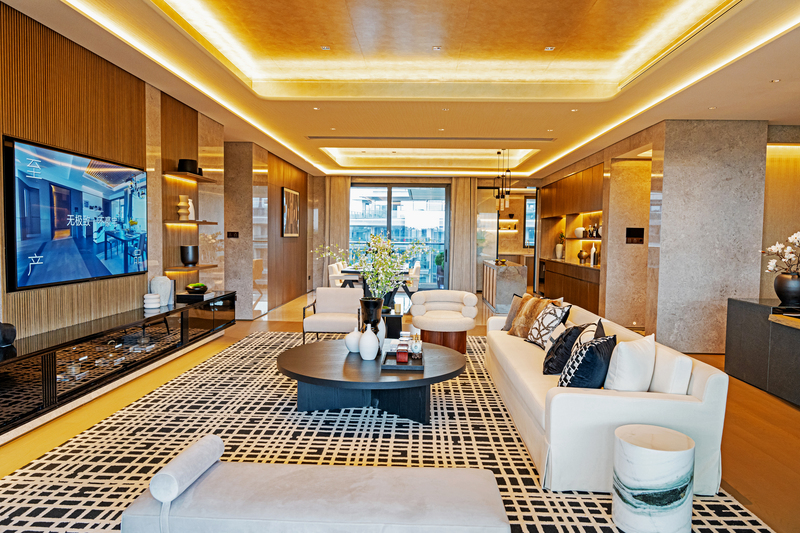
Custom hotel furniture solutions beat standard catalogs because a hotel is a system of constraints, not a list of products. Room dimensions vary between floors, brand standards dictate proportions and finishes, housekeeping routines dictate materials, and the public areas have to look like they belong to the same property as the guest rooms. A catalog can satisfy any one of those requirements at a time. A solution is the only approach that satisfies them together, in one package, with one party accountable for how it all lands.
That is not an argument against catalogs. For a small independent property with regular rooms and a short programme, a well-chosen catalog can be the sensible answer. The argument is that catalogs stop working at a predictable point, and it helps to know where that point is before the order is placed rather than after.
Where a Catalog Stops Working
The failure is rarely dramatic. It usually appears as a series of small compromises that nobody owns. The sofa is 40 mm too deep for the lobby circulation. The dining chair is right for the restaurant but reads too light in the banquet room. The desk fits the room but not the socket position. The wardrobe ends 90 mm short of the wall, and the gap is closed with a filler that guests notice from the bed.
Individually, each compromise is defensible. Together they produce a property that feels assembled rather than designed — and assembled properties are harder to sell, harder to photograph and harder to keep consistent when a piece has to be replaced three years later.
Four points where standard products break down
- Rooms that are not identical — corners, columns, bay windows, sloping ceilings.
- Brand standards that specify proportions, finishes or details the catalog does not carry.
- Public areas where the duty cycle is far heavier than residential-rated furniture allows.
- Renovation phases where new pieces must match furniture installed years earlier.
What Custom Hotel Furniture Solutions Actually Contain
The word "solution" is overused, so it is worth defining. In practice, a hotel furniture solution is four deliverables that arrive together: a scope that matches the room types, a specification that matches how the property will be used, a production plan that matches the opening programme and a documentation set that lets the hotel maintain what it bought.
| Deliverable | Catalog approach | Solution approach |
|---|---|---|
| Scope | Nearest available item per line | A package mapped to each room type |
| Specification | Fixed by the product line | Set by duty cycle and maintenance regime |
| Consistency | Matches within one product range | Matches across rooms, floors and phases |
| Accountability | Split across several suppliers | One party responsible for the whole package |
| Continuity | Depends on the item still being produced | Drawings and finish records retained |
A scope that follows the building
Room types are rarely as uniform as the schedule suggests. A corner room has an extra window and one wall less. A room over the lobby has a different ceiling. A suite combines two standard bays with a partition that has to be resolved in joinery. A solution starts by mapping the actual rooms, then groups them into types that can share production. The result is a package where every room is furnished correctly without turning the order into hundreds of one-offs.
A specification that follows the duty cycle
A lobby sofa and coffee table is not a living room set scaled up. It is furniture that will be sat on by thousands of people, used as a temporary luggage rack, and cleaned daily. A restaurant dining table and chairs is pulled, pushed and repositioned at every service. A solution specifies foam density, suspension, edge protection and finish adhesion for those conditions, and it says so in writing before production.
A production plan that follows the opening date
Hotel openings move. A solution treats the furniture programme as part of the construction programme: mock-up room first, then the bulk of the guest rooms, then public areas as they become accessible. Phasing has to be decided early, because each phase needs its own finish reference to stay consistent with the previous one.
The same logic applies to storage on site. A hotel that cannot take delivery of three hundred rooms at once needs the shipment split into waves that match the floors being handed over. That decision changes the packing plan, the labeling and the sequence of production, so it belongs in the package discussion rather than in a logistics email three weeks before shipping.
Documentation that outlives the project
The most overlooked part of a solution is the file that stays with the hotel: drawings, approved samples, finish formulation, hardware schedule and care instructions. Without it, every future repair is a guess. With it, a damaged nightstand can be re-made to match a room that was furnished years earlier.
The Argument That Matters Most: Consistency Over Time
Catalog ranges change. A supplier discontinues a finish, a factory retires a frame, a fabric is replaced by something "close". Hotels live longer than product cycles, and a property that renovates in phases will eventually need a piece that matches furniture bought earlier. Custom solutions handle this by keeping the specification and the drawings rather than relying on a product still being in a book.
We have re-produced pieces for hotels years after the original package, from retained drawings and finish records. In one case the replacement had to match a room that had been furnished in an earlier phase of the same property, where the corridor lighting made any shift in sheen obvious. It was possible because the original specification existed. It would not have been possible from a catalog number.
When a Catalog Is the Right Answer
Honesty matters here. If a property has regular rooms, a modest public area, a fixed brand standard that already specifies the pieces, and no unusual geometry, a catalog can be efficient. The furniture will be adequate, the programme will be simple, and the risk is contained.
The calculation changes as soon as any of the following is true: the building is a conversion, the brand standard requires a specific look, the property has suites or irregular rooms, the public areas carry heavy traffic, or the hotel expects to renovate in phases. At that point the compromises start to compound, and a package approach becomes the lower-risk route.
A simple test helps. Take the furniture schedule and mark every line that a catalog cannot meet exactly — because of size, finish, duty rating or a detail in the brand standard. If only a handful of lines are marked, a catalog with a few custom pieces is probably the right structure. If a third of the schedule is marked, the property is already a custom project pretending to be a catalog order, and it will be easier to manage as one package from the start.
How We Build These Packages
Richart Furniture has manufactured hotel furniture since 1990 from our plant in Zhaoqing, Guangdong, China. We produce both movable furniture and fixed joinery in the same facility, which is what allows a room's timber tone, sheen and detailing to stay consistent from the bed to the wall paneling. Production is certified to ISO 9001, ISO 14001 and OHSAS 18001, and our products and services have reached more than 500 high-star hotels worldwide, including properties operating under St. Regis, Ritz-Carlton, InterContinental, W Hotels, Park Hyatt, Conrad, Marriott, Shangri-La, Hilton and Banyan Tree.
A package usually starts with the room types and the brand standard, not with a product list. From there we build the scope, flag the constraints, and issue drawings for the parts that need to be resolved. The hotel furniture range shows the categories; the package is what turns them into a property.
Frequently Asked Questions
Does a custom package take longer than ordering from a catalog?
The extra time is concentrated in drawing approval and sampling, which happen before production. Once the drawings are approved, the production stages are the same as any other order. In practice the longer delay is usually caused by late approvals, not by the furniture being custom.
Can a custom package follow an existing brand standard?
Yes. Brand standards usually specify proportions, finishes and details rather than a specific manufacturer. We work to those requirements and raise anything that conflicts with the building or with the intended duty cycle.
What if the hotel wants to add rooms later?
That is one of the strongest arguments for a documented solution. With the drawings and finish records retained, a later phase can be produced to match the earlier one instead of approximating it.
Is a custom solution only for luxury properties?
No. The driver is complexity, not star rating. A mid-scale conversion with irregular rooms and a heavy public area can benefit more from a package approach than a luxury property with a regular tower and a fixed brand specification.
Send us your room types and brand standard and we will map them into a package before anything is specified. Custom hotel furniture solutions are decided on paper, where changes are still easy.
Map My Room Types Into a Package Look at Completed Hotels